
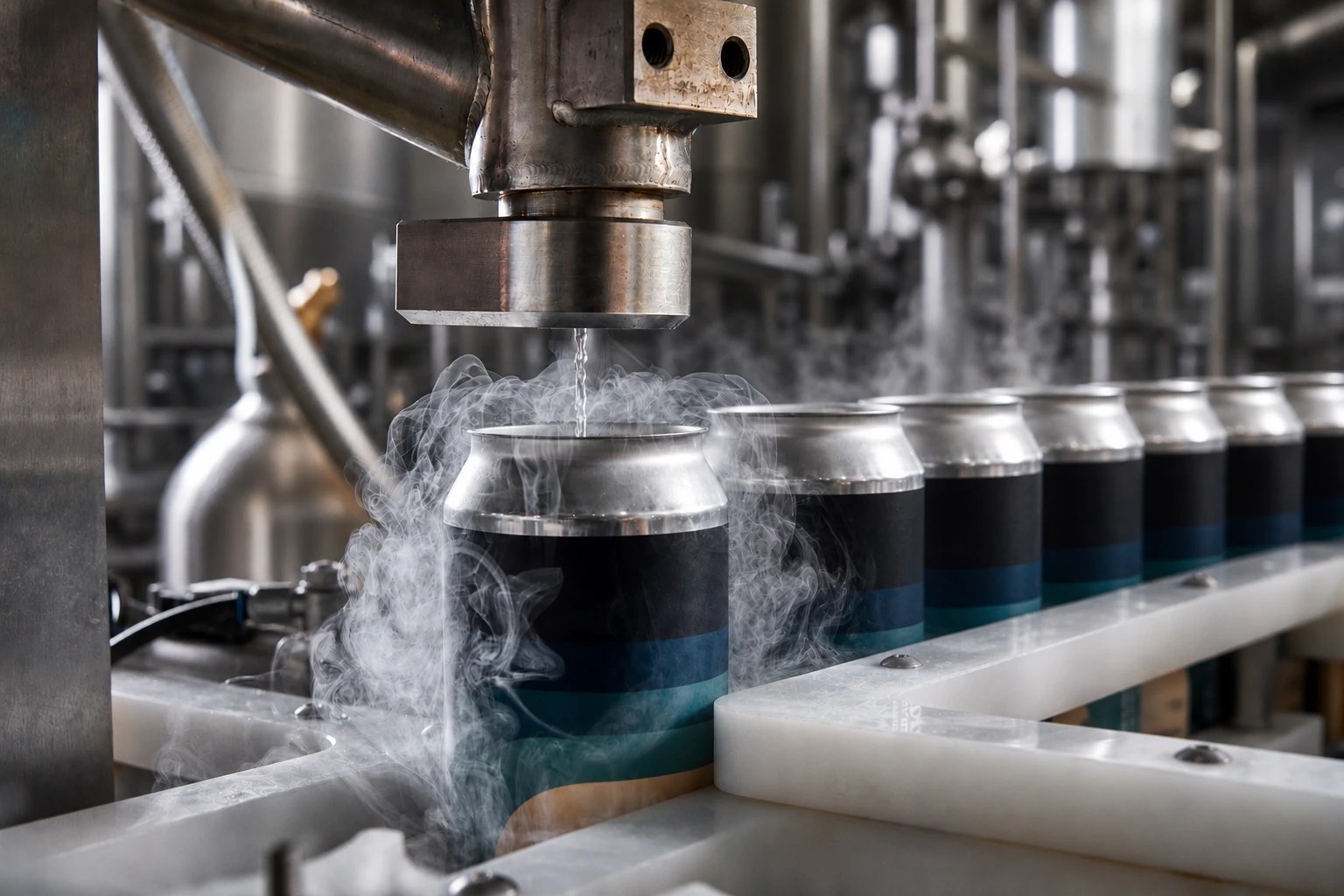
Liquid nitrogen dosing is the controlled introduction of a tiny, precise amount of liquid nitrogen into a container — a can, bottle or other package — immediately before it is sealed. The liquid flashes to gas, and as it expands it pressurizes the package and displaces oxygen, adding strength and protecting the product inside.
How it works
A doser injects a small, repeatable dose of liquid nitrogen into each container just before the lid is applied. The liquid nitrogen rapidly vaporizes into nitrogen gas — expanding to roughly 700 times its liquid volume. That expansion does two useful things at once: it creates internal pressure that rigidizes the container, and it purges the headspace of oxygen to create a nitrogen-rich environment.
Pressurizing cans and bottles
The expanding nitrogen pressurizes cans and PET bottles from the inside. That internal pressure prevents paneling, boosts rigidity and makes containers easier to handle and label down the line — which is what makes thin-wall aluminum cans and lightweight plastic bottles practical to run at speed.
Extending shelf life
By displacing oxygen from the headspace, dosing creates a nitrogen-rich environment that preserves flavor and aroma and slows oxidation. For oxygen-sensitive products, that means the contents stay fresher longer and quality is protected from the line all the way to the shelf.
Supporting lightweighting
Because nitrogen pressurization adds strength to the package, producers can use less material — lighter, thinner cans and bottles that still hold their shape. That helps companies cut packaging cost and meet sustainability and lightweighting goals without sacrificing durability.
Where it's used
Liquid nitrogen dosing shows up across beverage and food packaging — still beverages, water and juices, hard seltzers and RTDs, wine, nitro coffee and beer, oils and more. Wherever a package needs rigidity, oxygen protection or both, a precise drop of liquid nitrogen does the job.
See the JoyCan doser range →